How to Choose the Right Torque Motor for Your Application

Time:2026-10-18 Author:Liam
0%

Choosing the right Torque Motor begins with the machine’s real operating demands, not with a catalog headline. A packaging line, robotic joint, and semiconductor stage may all require direct drive, yet their priorities differ sharply. One may need continuous torque at low speed. Another may demand rapid acceleration, silent movement, or exceptional positioning accuracy.

Dr. Thomas A. Lipo, a respected electric-machine researcher and author, has stated, “Electric machine design is a compromise among competing requirements.” That principle matters here. A larger Torque Motor can deliver more torque, but it may increase inertia, heat, cost, and cabinet space. A smaller model may fit neatly into the assembly, then struggle during repeated acceleration cycles. That mistake is common.

Start with the load profile. Record continuous torque, peak torque, speed range, duty cycle, allowable temperature, and stopping frequency. Measure the shaft, gearbox, bearings, and driven mechanism together. A motor that looks suitable on paper may fail when friction, shock loads, or poor cooling appear in testing.

Control compatibility also deserves attention. Confirm encoder resolution, drive current, feedback protocol, and regenerative braking requirements. Environmental details matter too. Dust, washdown exposure, vibration, and limited airflow can change the specification completely.

The first selection may be wrong.

That is not a weakness. It is useful evidence. Prototype under realistic loads, review temperature readings, and compare efficiency against actual production needs. The best Torque Motor is not simply the strongest option. It is the one that remains accurate, cool, serviceable, and dependable throughout the application’s complete working cycle.
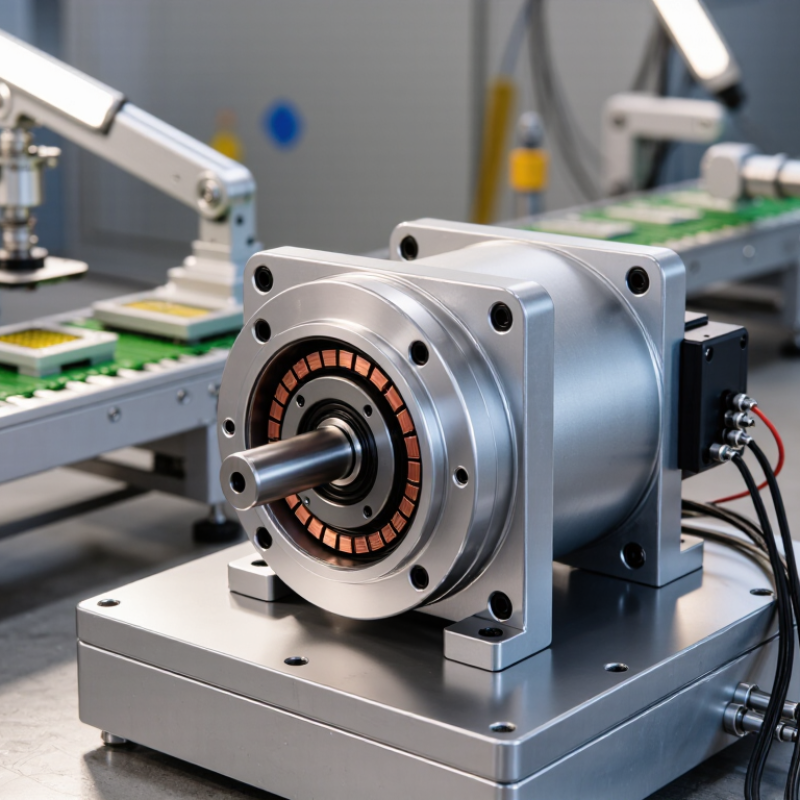
How to Choose the Right Torque Motor for Your Application

Define the Torque Motor Requirements for Your Application

How to Choose the Right Torque Motor for Your Application

Define the Torque Motor Requirements for Your Application

Start by describing the machine’s real movement, not only its maximum load. Record the required torque, speed, acceleration, and rotation angle. Include the load inertia and shaft orientation. These details often reveal sizing problems early.

Peak torque handles acceleration, while continuous torque supports normal operation. Calculate both values from measured conditions whenever possible. Add friction, imbalance, and transmission losses to the calculation. Do not rely on a generous safety factor alone. It can hide inaccurate assumptions.

Speed matters too. Record the operating speed, reversal frequency, and duty cycle. A motor running slowly may still overheat during repeated starts. Check the expected thermal load against verified technical data. Consider the encoder resolution, mounting space, shaft stiffness, and allowable backlash. The surrounding temperature also matters. Dust and vibration can change performance.

A neat calculation can still mislead. Real machines rarely behave perfectly. Test the load with a temporary measurement setup when practical. Compare calculated torque with observed current and temperature. Then review the requirement again before selecting the motor.

Compare Torque, Speed, Duty Cycle, and Precision Specifications

Choosing a torque motor starts with the load, not the catalog headline. Measure continuous torque, peak torque, speed, and acceleration separately. A motor rated for 20 N·m continuously may tolerate 40 N·m briefly, but only within its thermal limits. IEA’s Energy Efficiency 2017 report estimates that electric motor systems consume about 53% of global electricity. Small sizing errors can therefore increase energy use and heat.

Speed changes the decision. Direct-drive motors offer high torque at low speed, reducing gearbox backlash. However, their rated torque can fall sharply at higher revolutions. Check the full torque-speed curve, not one attractive point. For duty cycle, record loading during startup, motion, dwell, and reversal. IEC 60034-1 defines duty classes such as S1 continuous duty and S3 intermittent duty. A five-second move followed by a forty-second pause needs different thermal analysis than constant rotation.

Precision depends on more than encoder resolution. Review repeatability, torque ripple, friction, control bandwidth, and stiffness together. In practical testing, a smooth low-speed move may reveal vibration that a datasheet hides. I have seen teams select excessive peak torque, then discover poor positioning during rapid reversals. That choice looked safe, but it was not efficient. The U.S. Department of Energy’s Industrial Decarbonization Roadmap also emphasizes efficient motor and drive systems as important industrial energy measures. Leave thermal margin, but question oversized designs. Measure the real load. Test the uncomfortable operating point.

Select the Appropriate Motor Type and Operating Configuration

Choosing the motor type and operating configuration starts with the load, not the catalog. A frameless torque motor suits compact direct-drive assemblies, while a housed motor may simplify installation and protection. For applications needing repeated indexing, closed-loop servo control can improve position accuracy. Continuous rotation demands different thermal planning than short, high-torque moves. The difference is easy to underestimate.

The International Energy Agency reports that electric motor-driven systems consume about 53% of global electricity. The U.S. Department of Energy also estimates that motor systems represent roughly 70% of industrial electricity use. These figures make operating efficiency a design priority, not a minor specification. Check continuous torque, peak torque, speed range, duty cycle, and allowable temperature. IEC 60034-1 provides a useful framework for motor ratings and operating conditions.

A practical selection should include the actual acceleration profile, reflected inertia, bearing loads, and cooling method. Air cooling may work in an open machine, but an enclosed housing can trap heat around the windings. Regenerative braking adds another concern. The drive must absorb returned energy safely. I have seen designs fail because peak torque was selected correctly, but continuous torque was ignored. That mistake is expensive. A spreadsheet can still mislead. Recheck assumptions using measured cycle data, especially when friction changes with temperature. The best configuration is rarely the one with the highest peak rating; it is the one that survives the complete operating cycle.

Evaluate Thermal Performance, Control Systems, and Mechanical Integration

How to Choose the Right Torque Motor for Your Application

Thermal performance should be measured at the actual duty cycle, not only at rated torque. Continuous torque can generate steady heat inside the stator and bearings. Check winding temperature, housing temperature, ambient conditions, and cooling airflow. IEC 60034-1 defines operating limits, but real installations often run hotter than laboratory tests. The International Energy Agency reports that electric motor systems consume about 53% of global electricity. Small efficiency losses can therefore become significant operating costs.

Control quality matters equally. Select a drive system that supports precise current regulation, position feedback, and safe overload handling. A high-resolution encoder can improve low-speed smoothness, especially during indexing or tension control. Test acceleration, reversal, and emergency stopping with the real load inertia. The U.S. Department of Energy’s Motor Systems Market Assessment highlights the importance of matching motor, drive, and application conditions rather than optimizing one component alone. That principle is easy to overlook.

Mechanical integration decides whether performance survives production. Confirm shaft stiffness, mounting flatness, bearing loads, cable bending radius, and thermal paths into the machine frame. Keep coupling misalignment minimal; a few tenths of a millimeter may increase vibration noticeably. Leave service access around connectors and feedback devices. I have seen excellent motors underperform because the mounting plate trapped heat. My first selection is rarely perfect. Rechecking assumptions after a prototype test is often more valuable than trusting a spreadsheet.

Verify Compatibility Through Testing, Maintenance, and Lifecycle Assessment

Choosing a torque motor starts with the real machine, not a catalog rating. Record continuous torque, peak torque, speed, inertia, duty cycle, and ambient temperature. Then compare these values with the motor’s thermal and mechanical limits. A motor may meet peak torque briefly, yet overheat during repeated indexing. Measure it under load. In field testing, a temperature probe near the winding often reveals problems hidden by short bench tests. Feedback resolution also matters when the shaft must stop within a narrow angle. Check connector layout, mounting tolerances, cable bend radius, and controller compatibility before approval. These details seem minor. They are not.

A practical verification plan should include cold starts, maximum payloads, rapid reversals, and several hours of continuous operation. Log torque demand, winding temperature, vibration, position error, and current. Repeat tests after the assembly reaches operating temperature. This exposes thermal drift and intermittent feedback faults. One overlooked issue is the load inertia after tooling changes. We once trusted the original calculation too much. That assumption failed when a heavier fixture increased settling time. Physical testing corrected the model.

Maintenance should match actual stress. Inspect bearings, fasteners, seals, connectors, and cooling paths at defined intervals. Trend noise, temperature, and current instead of waiting for failure. Keep service records with operating hours and fault patterns. For lifecycle assessment, estimate energy use, replacement access, spare-part availability, repair time, and disposal requirements. A cheaper motor can cost more when downtime requires a full assembly change. Recheck the choice after process upgrades. Machines change. Specifications should change.

FAQS

What should be measured before choosing a torque motor?

Measure continuous torque, peak torque, speed, acceleration, and the complete motion cycle. Start with the real load. A 20 N·m continuous rating may allow 40 N·m briefly, but heat limits still apply.

Why is the full torque-speed curve important?

Rated torque can drop sharply as speed increases. Check torque at startup, operating speed, acceleration, and reversal. One attractive catalog point can mislead you.

How does duty cycle affect motor selection?

Record startup, movement, dwell, braking, and reversal times. A five-second move followed by a forty-second pause creates different heating than constant rotation. Small timing details matter.

What does direct drive change in an application?

Direct drive can provide strong low-speed torque and reduce gearbox backlash. It may improve mechanical simplicity. However, high-speed torque may fall quickly.

Is encoder resolution enough for precise positioning?

No. Review repeatability, torque ripple, friction, control bandwidth, and mechanical stiffness together. A smooth low-speed test may reveal vibration. Resolution alone is not precision.

How should continuous and peak torque be evaluated?

Peak torque supports short acceleration or reversal events. Continuous torque determines long-term thermal performance. Selecting only peak torque is a common mistake.

How do cooling and housing affect motor performance?

An open motor may release heat effectively. An enclosed housing can trap heat near the windings. Check temperature rise under real operating conditions.

What should be checked during regenerative braking?

The drive must safely absorb energy returned during deceleration. Review braking frequency, returned energy, and thermal limits. This detail is easy to overlook.

How can an oversized motor create problems?

Extra capacity may increase cost, energy use, mass, and heat. Leave thermal margin, but question excessive peak ratings. Bigger is not always safer.

How should a final motor choice be verified?

Test the uncomfortable operating point, including rapid reversals and changing friction. Compare measured cycle data with spreadsheet assumptions. The spreadsheet may still lie.

Conclusion

Choosing the right Torque Motor begins with clearly defining the application’s requirements, including load characteristics, operating environment, motion profile, and expected service life. Compare essential specifications such as continuous and peak torque, speed range, duty cycle, positioning precision, acceleration, and allowable load inertia. These factors help determine whether a direct-drive, frameless, housed, or other motor configuration is most suitable for the system.

Next, evaluate thermal performance, cooling requirements, feedback devices, drive and control compatibility, and the mechanical space available for installation. The motor should integrate smoothly with the shaft, bearings, housing, and control architecture while maintaining stable performance under real operating conditions. Before final selection, verify compatibility through prototype testing or simulation, assess maintenance needs, and consider efficiency, reliability, replacement access, and total lifecycle cost. A well-matched motor should not only meet current performance targets but also provide sufficient operating margin for future demands.

Liam

Liam

Liam is a dedicated marketing professional with a profound expertise in the industry, where he excels at highlighting the unique advantages of our core products. With a keen understanding of market trends and consumer needs, Liam frequently updates our company’s professional blog, providing......