Choosing an Electric Gear Motor in 2026 demands more than comparing catalog torque and price. The correct choice begins with the machine’s real operating conditions. Measure required output speed, starting torque, duty cycle, load inertia, and reversing frequency. A conveyor moving cartons needs different protection than a robotic joint making short, precise movements.
Dr. David A. Staton, a recognized motor-design specialist, states, “Motor selection must begin with the application, not the motor catalog.” That principle remains highly practical. A compact gearmotor may fit the frame, yet overheat under continuous duty. A powerful model may deliver torque, but waste energy during frequent light-load operation. Small details matter. Check gearbox efficiency, backlash, shaft loading, noise, brake requirements, and thermal limits. Also review ingress protection for dusty or wet environments. In 2026, energy performance and serviceability deserve equal attention. Look for efficient permanent-magnet designs, condition-monitoring options, and accessible replacement parts.
Experience often exposes weaknesses that specifications hide. A spreadsheet can look perfect. The machine may still vibrate, stall, or require unexpected maintenance. Test the Electric Gear Motor under realistic load profiles whenever possible. Record temperature, sound, current, and acceleration during startup. Then question the result. Was the measurement taken after the gearbox reached operating temperature? Was the heaviest load included? These checks improve reliability and protect long-term operating costs. The best selection is rarely the largest or cheapest unit. It is the motor-gearbox combination that performs predictably, safely, and efficiently in its actual working environment.
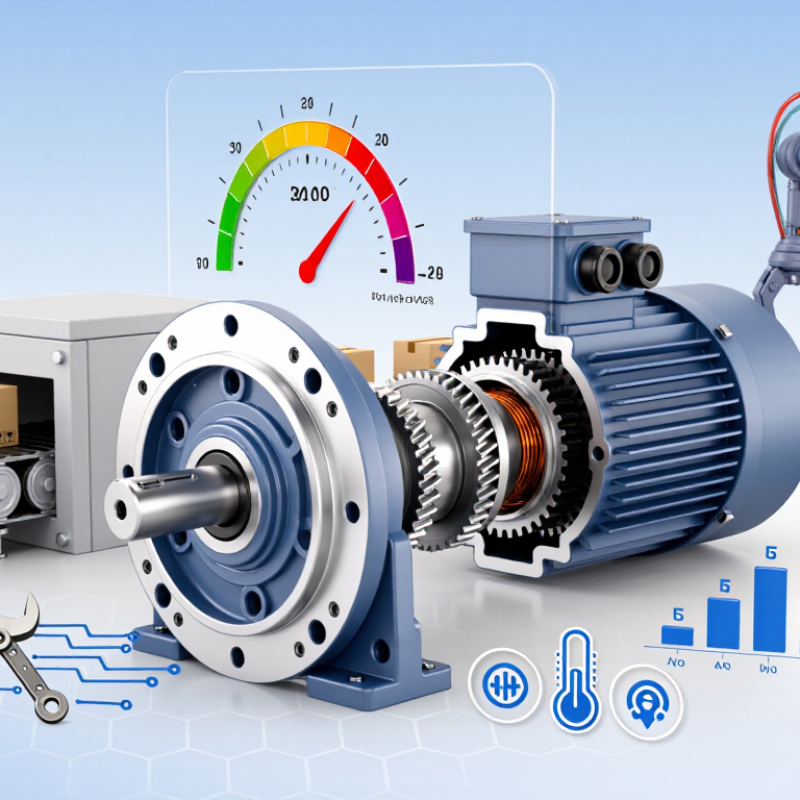
How to Choose an Electric Gear Motor in 2026?
Electric gear motors combine a motor, gearbox, bearings, seals, and housing. Some units also include brakes, encoders, or cooling fans. Each component affects reliability, noise, efficiency, and control.
Spur gear motors suit simple, low-cost drives. Helical gears run more quietly and handle higher loads. Planetary gear motors provide high torque in compact spaces. Worm gears offer strong speed reduction, but their sliding contact can create heat. Bevel gears help transmit power through an angle. The International Energy Agency reports that electric motor systems use roughly 50% of global electricity. Therefore, efficiency deserves serious attention, not just purchase price.
Match rated torque with the real load, including starting resistance. Check output speed, duty cycle, shock loads, backlash, and ambient temperature. A sealed housing may be essential near dust or washdown areas. In my own selection work, I sometimes over-specify torque. That increases cost and size. It is a useful mistake to revisit.
Tips: Compare gearbox efficiency at your actual operating speed. Ask for thermal ratings, service factors, and test conditions. ISO 6336 calculations can support gear strength checks, while IEC 60034 data helps evaluate motor performance. Also inspect shaft alignment and bearing capacity. A perfect motor with poor alignment still fails early. Market studies from Fortune Business Insights and Grand View Research indicate continued growth in geared motor demand through 2030, driven by automation and energy-saving upgrades. Forecasts vary, so treat them as direction, not certainty.
Practical comparison of gear motor configurations, operating characteristics, and core selection parameters
| Gear Motor Type | Typical Reduction Ratio | Typical Efficiency | Torque and Speed Characteristics | Strengths | Common Limitations | Suitable Applications |
|---|---|---|---|---|---|---|
| Helical Gear Motor | 3:1–100:1 per stage or unit configuration | 90%–97% | Smooth transmission, high continuous torque, and moderate-to-high output speeds. | High efficiency, low noise, compact inline construction, and good durability. | Usually costs more than simpler spur systems; high ratios may require multiple stages. | Conveyors, packaging machinery, material handling, and process equipment. |
| Worm Gear Motor | 5:1–100:1 in one compact stage | 50%–90%, depending on ratio, lubrication, and load | High reduction and low output speed with strong starting torque. | Right-angle layout, compact high-ratio reduction, and quiet operation. | Lower efficiency and greater heat generation; self-locking must not be assumed without verification. | Gates, lifts, indexing systems, small conveyors, and positioning mechanisms. |
| Planetary Gear Motor | 3:1–100:1 per stage; higher ratios use multiple stages | 94%–98% per stage | Very high torque density, low backlash options, and strong acceleration capability. | Compact size, excellent load sharing, high stiffness, and precise motion control. | Higher cost, tighter manufacturing requirements, and more demanding lubrication control. | Robotics, servo axes, automation, machine tools, and mobile equipment. |
| Spur Gear Motor | 2:1–10:1 per stage; multiple stages increase total ratio | 85%–95% per stage | Efficient parallel-shaft power transmission at low-to-medium speeds. | Simple design, economical production, and easy maintenance. | More noise and vibration than helical gearing; limited shock-load capability. | Small appliances, light conveyors, actuators, and general-purpose machinery. |
| Bevel Gear Motor | 3:1–200:1, depending on the number of stages | 90%–97% | Changes the power direction, commonly by 90°, while maintaining high torque transfer. | Right-angle output, good efficiency, and strong continuous-load performance. | More expensive and mechanically complex than spur gearing; alignment is important. | Right-angle conveyors, mixers, packaging lines, and industrial drives. |
| Cycloidal Gear Motor | 6:1–119:1 per stage | 80%–95% | High shock-load capacity, low-to-moderate speed, and high torque at the output shaft. | High overload tolerance, robust contact geometry, and low backlash in suitable designs. | Can produce more vibration; housing and eccentric components require precise assembly. | Heavy-duty conveyors, mixers, hoists, and high-impact industrial machinery. |
| Harmonic-Drive-Type Gear Motor | 30:1–160:1 in one stage | 70%–90%, depending on ratio and operating conditions | Very high reduction with extremely low backlash and precise positioning. | Excellent precision, compact coaxial design, and high positional repeatability. | Lower shock-load tolerance than cycloidal designs and relatively high cost. | Robotic joints, camera systems, semiconductor equipment, and precision automation. |
| Component or Parameter | What It Controls | Typical Engineering Data | How to Select It |
|---|---|---|---|
| Electric Motor | Input power, starting torque, speed, and thermal capacity | Common industrial motor speeds include approximately 900, 1,500, and 3,000 rpm at 50 Hz, depending on pole count and slip. | Match rated power, voltage, frequency, duty cycle, ambient temperature, and starting requirements. |
| Gear Train | Speed reduction, torque multiplication, noise, backlash, and efficiency | Output speed is approximately motor speed divided by the total reduction ratio; output torque is approximately motor torque multiplied by ratio and efficiency. | Choose the gear type according to required ratio, torque density, precision, shock load, and allowable noise. |
| Output Shaft | Transfers torque and radial or axial loads to the driven machine | Shaft diameter, keyway size, allowable overhung load, and permissible axial load vary by frame size and gearbox design. | Verify torque, peak torque, shaft geometry, coupling method, and external bearing loads. |
| Bearings | Supports shafts and maintains gear alignment | Bearing life is affected by radial load, axial load, speed, lubrication, contamination, and operating temperature. | Select a design with sufficient load rating and service life for the actual duty cycle. |
| Lubrication System | Reduces friction, wear, and heat in gears and bearings | Common methods include grease or oil; oil level, viscosity, seals, and temperature limits must follow the design requirements. | Consider mounting position, speed, temperature, maintenance interval, and contamination risk. |
| Housing | Provides structural support, sealing, heat dissipation, and alignment | Typical materials include aluminum alloys for lighter units and cast iron for higher-load industrial gearboxes. | Check mounting orientation, available space, ingress protection, corrosion exposure, and heat dissipation. |
| Motor Control | Controls speed, acceleration, braking, direction, and energy use | Variable-frequency drives can adjust AC motor speed; servo systems add feedback for closed-loop position or speed control. | Choose open-loop or closed-loop control based on speed regulation, positioning accuracy, and overload requirements. |
| Duty Cycle | Determines thermal stress and expected service life | Continuous, intermittent, cyclic, reversing, and high-start-frequency duties impose different thermal and mechanical loads. | Calculate RMS torque and account for acceleration, deceleration, peak loads, starts per hour, and rest periods. |
| Protection and Environment | Protects electrical and mechanical parts from dust, water, chemicals, and heat | Ingress protection ratings use the IP code; the first digit addresses solids and the second digit addresses water ingress. | Specify the required IP level, insulation class, ambient range, corrosion protection, and any washdown or hazardous-area requirements. |
How to Choose an Electric Gear Motor in 2026?
Defining the Required Speed, Torque, Power, and Duty Cycle
Choosing an electric gear motor starts with the machine’s real operating conditions. Define the required output speed at the gearbox shaft, not the motor shaft. Measure the load while starting, running, stopping, and reversing. A conveyor may need 30 revolutions per minute, but its starting torque can be several times higher. Specify both continuous torque and peak torque. Do not size from weight alone. Friction, acceleration, incline, and gearbox efficiency also matter.
Power connects torque and speed. Use the required output torque and angular speed to estimate mechanical power. Then allow a practical margin for heat, wear, voltage variation, and unexpected resistance. My first estimate is often too optimistic. Testing a loaded prototype can reveal this quickly. Check the motor’s rated speed under load, because no-load figures can be misleading. The duty cycle is equally important. Record running time, rest periods, starts per hour, reversing frequency, and daily operating hours. A motor running for ten seconds every minute needs different thermal capacity from one running continuously.
Tips: Write the worst-case load beside the normal load. Choose a suitable service factor, but avoid excessive oversizing. Confirm mounting space, shaft dimensions, noise limits, ambient temperature, and control compatibility. Keep a simple test log. Small details matter.
How to Choose an Electric Gear Motor in 2026?
Matching gearbox design, motor technology, and control requirements starts with the real machine, not a catalog rating. Measure the load. Record speed, torque, acceleration, operating hours, and stopping frequency. A conveyor moving uneven products may need more starting torque than its average load suggests. Include friction, shock loads, and a practical service factor.
Choose the gearbox around the motion profile. Helical gears suit efficient continuous movement, while planetary designs can provide high torque in limited space. Worm gears may offer useful holding behavior, but their heat and efficiency losses deserve careful checking. Backlash matters in indexing equipment. So does shaft strength. A compact housing can still fail when heat has nowhere to escape.
Motor technology must match the control system. An induction motor with a suitable variable-frequency drive can serve steady industrial duty. Permanent-magnet motors often improve efficiency and dynamic response, especially under changing loads. Servo systems add accurate feedback through an encoder, but they require careful tuning and cleaner installation. Control changes everything. Check braking energy, emergency stops, cable length, and sensor resolution before selecting the motor.
Use measured data whenever possible. A neat spreadsheet can still mislead when startup conditions are ignored. I have seen small alignment errors create noise, heat, and premature bearing wear. Confirm the duty cycle with a prototype or monitored trial. Review ingress protection, ambient temperature, maintenance access, and replacement procedures with the technicians who will operate the equipment. An apparently efficient motor is not a good choice if its controls are difficult to service.
How to Choose an Electric Gear Motor in 2026?
Choosing an electric gear motor starts with the real workload, not the catalog’s maximum rating. Check operating torque, speed, duty cycle, and starting loads together. Efficiency matters most during long running periods, where small losses become noticeable heat and energy costs. Ask for efficiency data at your actual speed and load. A motor rated highly at one point may perform poorly elsewhere. I once selected by peak torque alone, and the unit ran hotter than expected.
Protection ratings should match the installation environment. Dust, water spray, washdown, and outdoor exposure require different protection levels. Confirm the rating for the complete motor and gearbox assembly, not only one component. Measure the available space carefully, including shaft length, cable clearance, and service access. Noise also deserves a practical test. A quiet motor in an empty workshop may sound different beside metal frames or walls. Installation errors can create vibration, even with a good motor.
Tips: Record torque and speed during normal operation. Compare sound levels under load. Leave room for cooling and maintenance. Check mounting alignment twice. I still recheck these details, because small assumptions can become expensive corrections.
Compare typical efficiency and operating noise before checking protection ratings, available space, load requirements, and installation conditions. Values are representative engineering ranges and vary with speed, torque, lubrication, enclosure, and mounting.
Selection guide: Helical, planetary, and bevel-helical gear motors generally provide higher efficiency than worm gear motors. Lower noise is often preferred for indoor or occupied environments, while an IP65 or higher enclosure is commonly selected where dust or water exposure is expected. Always verify the motor’s rated torque, duty cycle, voltage, mounting position, dimensions, and required braking performance.
How to Choose an Electric Gear Motor in 2026?
Choosing an electric gear motor in 2026 requires more than checking torque and speed. In field installations, reliability appears in small details: sealed bearings, stable thermal performance, and consistent gearbox alignment. Ask for test data under your actual load, not only a catalog rating. A motor running near its limit may work today, then overheat during a dusty summer shift. I have seen this mistake delay production repairs.
Maintenance should be measured in labor hours, access time, and replacement parts. A low purchase price can become expensive when technicians need four hours to remove one motor. Compare lubrication intervals, bearing access, spare-part availability, and expected service life. Calculate energy use across five years, including downtime and emergency freight. The calculation is imperfect, but it exposes hidden costs. Supplier support matters equally. Request wiring guidance, commissioning help, fault-response times, and written warranty terms. A helpful engineer can prevent misalignment damage. Do not assume every support promise is practical; test it before ordering.
Tips: Build a simple comparison sheet. Record torque, duty cycle, ambient temperature, ingress protection, maintenance hours, and response commitments. Ask for a reference installation with similar loads. Leave room for uncertainty. Your operating conditions may change.
Measure normal torque, speed, duty cycle, and starting load. Do not select from peak torque alone. A motor may overheat during a long, dusty shift.
Efficiency changes with speed and load. Request data for your real conditions. Small losses become noticeable heat and higher energy costs.
Match protection to dust, water spray, washdown, and outdoor exposure. Confirm the rating for the complete motor and gearbox. One protected component is not enough.
Measure the housing, shaft length, cable clearance, and service access. Leave room for cooling and maintenance. Tight spaces create awkward repairs.
Test sound levels under load, near walls, and beside metal frames. An empty workshop can hide unwanted noise. Vibration may come from poor alignment.
Check lubrication intervals, bearing access, replacement parts, and removal time. Four hours of technician labor can exceed a low purchase price. Small details matter.
Include purchase cost, energy use, maintenance, downtime, and emergency transport. The estimate will be imperfect. Still, it reveals hidden expenses.
Ask for wiring guidance, commissioning help, fault-response times, and written warranty terms. Request a similar installation reference. Promised support should be tested, not assumed.
Choosing the right Electric Gear Motor in 2026 begins with understanding the available motor and gearbox types, along with essential components such as gearing, bearings, shafts, and control interfaces. Start by defining the application’s required speed, torque, power, operating time, load variation, and duty cycle. These factors help determine the appropriate motor technology, gear ratio, gearbox design, and control method for stable and efficient performance.
A complete evaluation should also consider efficiency, protection ratings, operating noise, physical dimensions, mounting options, and environmental conditions. Beyond initial specifications, compare expected reliability, maintenance requirements, service access, total ownership cost, delivery capability, documentation, and technical support. Selecting a motor that fits both the application and long-term operating conditions can reduce energy use, prevent premature wear, simplify installation, and improve overall system value.

Viterra Motor