Choosing a Heavy Duty Gear Motor is rarely as simple as matching horsepower to a machine.
Real applications demand more careful judgment. A conveyor may start under a full load, not an empty belt. A mixer may face shock torque, vibration, and long operating hours. These conditions can quickly expose a weak gearbox, undersized bearings, or poor thermal performance.
This guide presents seven practical tips for selecting a reliable Heavy Duty Gear Motor. It considers output torque, gear ratio, duty cycle, mounting position, motor efficiency, environmental protection, and maintenance access. Each factor affects service life and operating cost. A motor running beside a dusty crusher needs different protection from one installed inside a clean packaging room.
Look beyond the catalog headline. Check continuous torque, peak starting torque, allowable radial loads, lubrication requirements, and rated operating temperature. Manufacturer datasheets and application guidance provide stronger evidence than sales language alone. Independent engineering review can also reduce selection errors, especially for demanding equipment.
Small details matter.
A compact motor may fit the frame but lack sufficient cooling. A larger unit may survive heavy loads but waste energy during light-duty operation. Even experienced buyers can overlook shaft alignment or incorrect mounting orientation. That possibility deserves attention.
Use these seven tips as a practical screening method, not an absolute formula. Confirm the final choice with the manufacturer, qualified engineers, and actual site conditions. Reliable performance begins with honest assumptions, measurable requirements, and a willingness to reconsider the first attractive option.
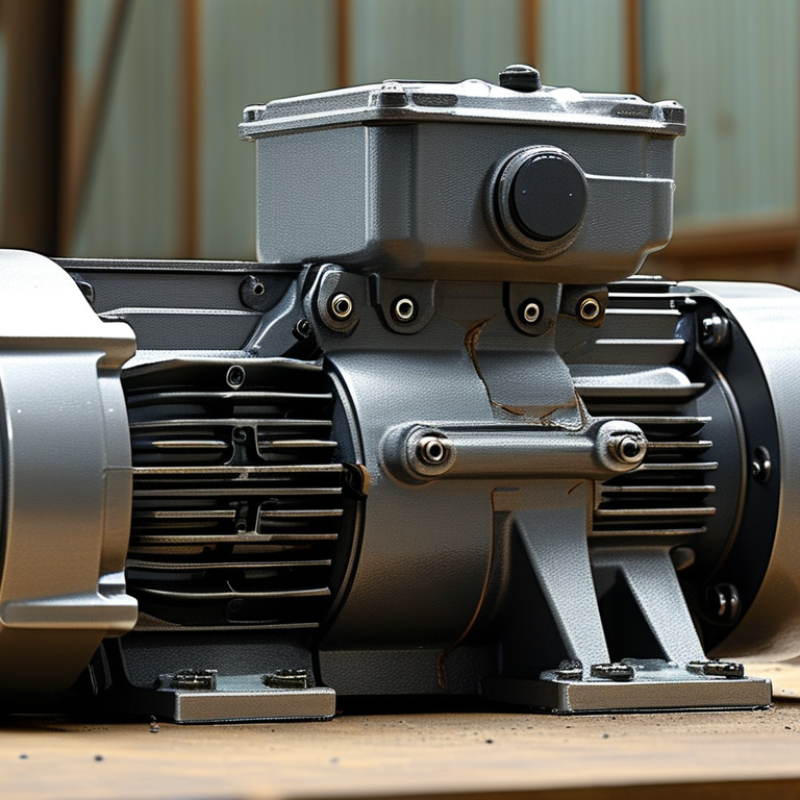
A heavy-duty gear motor is more than a motor with a larger frame. It must deliver stable torque under shock loads, long duty cycles, heat, dust, and vibration. The U.S. Department of Energy’s Motor Systems Market Assessment reports that motor-driven equipment uses about 70% of industrial electricity in the United States. Efficiency matters, but survival matters too.
In field inspections, I look at the gearbox before the nameplate. Hardened gears, tapered bearings, rigid housings, and effective lubrication reduce wear at the real contact points. A service factor above the calculated load can help, especially during starts or jams. However, a large service factor does not repair poor alignment. Check the output torque, speed, duty cycle, ambient temperature, and starting frequency together. One number is never enough.
Protection ratings also define heavy-duty performance. IEC 60529 classifies enclosure protection against dust and water, while IEC 60034-1 addresses motor ratings and operating conditions. The IEA estimates that motor systems consume roughly half of global electricity, so heat management affects both reliability and operating cost. A cooling fan, oil bath, or thermal sensor may be necessary in continuous service. I have seen oversized units fail early because airflow was blocked.
“heavy-duty” is sometimes a marketing label, not a verified operating result.
Ask for load-test data, temperature-rise records, and documented maintenance intervals before choosing.
7 Tips for Choosing a Heavy Duty Gear Motor
How to Match Motor Torque and Speed to the Application
Tip 1: Define the real load before selecting a motor. Record conveyor weight, incline, friction, and starting resistance. Measure peak load, not only normal running load. A motor may run smoothly at steady speed but fail during startup. I have seen undersized units overheat beside apparently light conveyors.
Tip 2: Match output torque and speed to the gearbox ratio. Calculate required torque at the driven shaft, then include gearbox efficiency and a suitable service factor. For example, a 2,000-newton load may require far more torque on an incline than on level ground. Do not rely on motor horsepower alone. Torque matters most at the shaft.
Tip 3: Check speed under actual operating conditions. A small speed error can cause poor product spacing, shock loading, or excessive wear. Variable loads need extra attention. Choose a motor that can handle frequent starts, stops, and reversals. Thermal limits matter.
Tip 4: Consider load inertia and duty cycle. A large drum, screw, or mixer may demand high acceleration torque. Continuous operation also needs enough cooling capacity. Ambient heat, dust, and restricted airflow can reduce performance.
Tip 5: Leave room for uncertainty. Calculations are useful, but field conditions are rarely perfect. Recheck torque after installation and inspect temperature, vibration, and current draw. Oversizing is not always safer; it can reduce efficiency and create harsher mechanical impacts. A careful match is better than a powerful guess.
Choosing a heavy-duty gear motor starts with the gearbox, not the motor label. In field installations, I have seen undersized reducers overheat beside dusty conveyors. Match the gearbox type to the motion. Helical gearboxes suit efficient, continuous rotation. Bevel-helical units handle right-angle layouts with strong torque transfer. Worm gearboxes offer compact, quiet operation, but efficiency can fall sharply at high reduction ratios. Planetary designs provide high torque density where space is limited. That distinction matters.
Calculate required output torque from load, speed, acceleration, and incline. Then add a realistic service factor for shock loads and starts. Do not select a ratio from speed alone. A 20:1 ratio may reach the target speed, yet produce excessive output torque or reduce efficiency. Check motor speed, rated gearbox torque, thermal capacity, and permissible overhung load together. Keep the operating point away from the gearbox limit. Too close is risky.
Choose the smallest practical ratio that meets the speed requirement, unless controlled low speed is essential. Multi-stage reduction improves flexibility, but adds losses, cost, and backlash. For reversing systems, inspect backlash carefully. For frequent starts, confirm the gearbox survives peak torque, not only average torque. I once trusted a spreadsheet that ignored acceleration; the motor stalled during commissioning. That mistake was avoidable. Review calculations with actual load data, ambient temperature, mounting position, and lubrication requirements. Ask for test evidence when duty conditions are severe. Reliable selection is specific, measured, and slightly cautious.
A heavy duty gear motor should be selected from real operating data, not catalog torque alone. The U.S. Department of Energy’s Motor System Market Assessment reports that motor-driven equipment uses about 68% of industrial electricity in the United States. Small efficiency losses can therefore become expensive over long shifts. Record the driven load, starting torque, speed, and peak cycles. Leave practical torque margin, but avoid excessive oversizing. It can reduce efficiency and control quality.
Tip 1: Verify load capacity. Calculate continuous, intermittent, and shock loads separately. Tip 2: Match the duty cycle. IEC 60034-1 defines operating duties such as S1 continuous duty and S3 intermittent duty. A conveyor running eight hours differs from a crusher starting every few minutes. Tip 3: Check the reducer’s service factor against actual shock loads. I once saw a motor fail early because “average load” ignored repeated jams. That assumption was weak.
Tip 4: Examine the operating environment. Dust, washdown, heat, cold, and altitude affect sealing and cooling. Tip 5: Confirm the required output speed under load, not at no-load conditions. Tip 6: Review starting current and braking requirements with the electrical engineer. Tip 7: Document maintenance access, lubrication intervals, and replacement constraints. The U.S. DOE also emphasizes system-level assessment, because poor alignment, throttling, and transmission losses can outweigh motor efficiency gains. Measure twice. Real conditions are rarely perfect.
7 Tips for Choosing a Heavy Duty Gear Motor
Efficiency starts with matching the motor to the real load, not the ideal load. Check rated torque, starting torque, speed range, and duty cycle. A motor running near its limit may overheat, waste energy, and wear gears quickly. Measure the conveyor or mixer during startup. That brief surge matters. I once saw a motor selected only by its running power. It worked, but repeated starts damaged the coupling.
Protection should match the working environment. Look for suitable enclosure protection against dust, water, and accidental contact. In a washdown area, inspect seals, cable entries, and housing joints carefully. Heat, vibration, and corrosive materials also affect service life. Do not trust a rating without checking installation conditions. A small detail can fail. A thermal sensor and overload protection add useful safeguards, but they cannot correct poor sizing.
Maintenance access often decides whether equipment stays productive. Choose a design with accessible lubrication points, replaceable seals, and clear inspection areas. Check the recommended oil type, change interval, and operating temperature. Listen for rising noise or unusual vibration; these are early warnings. Keep basic records, even if they seem tedious. Service support should provide manuals, spare-part information, troubleshooting guidance, and realistic response times. Ask who handles technical questions after installation. Remote advice helps, but local expertise may be essential when a gearbox stops unexpectedly. No selection checklist is perfect. Recheck the decision against actual site conditions.
| Tip | Selection Dimension | Recommended Data or Practical Range | What to Check Before Purchase | Maintenance and Service Considerations |
|---|---|---|---|---|
| 1 | Define Torque, Speed, and Duty |
Select the motor from the actual output torque and speed requirements rather than motor power alone. Torque RPM Duty Cycle |
Confirm continuous and peak torque, output speed, starting frequency, load inertia, acceleration time, and direction changes. Include a reasonable service factor for shock loads and unknown operating conditions. | Record operating hours, start-stop frequency, ambient temperature, and load history so future troubleshooting and replacement sizing are accurate. |
| 2 | Check Gearbox and Motor Efficiency | Compare the complete gear-motor efficiency at the intended load and speed. Helical and helical-bevel gearboxes commonly provide better efficiency than worm gearboxes, while actual performance depends on ratio, lubrication, and load. | Request efficiency data for the complete assembly, not only the motor. Check rated-load efficiency, partial-load behavior, standby power, and compatibility with the selected variable-frequency drive. | Use the correct lubricant and maintain proper oil level. Misalignment, overload, low oil level, and excessive temperature can reduce efficiency and shorten service life. |
| 3 | Select the Correct Protection Rating | For dusty or splash-prone industrial areas, an enclosure such as IP55 or higher is often considered. Washdown, outdoor, or high-moisture applications may require a higher rating after a site assessment. | Match the IP rating to dust, water jets, cleaning chemicals, condensation, and installation orientation. Verify shaft-seal design, cable entries, drain plugs, and corrosion-resistant surface treatment. | Inspect seals, cable glands, terminal boxes, and drain openings during scheduled maintenance. Replace damaged seals promptly to prevent contamination of bearings and windings. |
| 4 | Confirm Thermal Capacity and Insulation | Check the motor insulation class, allowable temperature rise, ambient temperature, installation altitude, and cooling method. Continuous operation at low speed may require an independently powered cooling fan. | Verify overload capacity, thermal protection, thermistors or thermal switches, and derating requirements. Confirm that the motor can dissipate heat in the actual mounting position. | Keep cooling fins, fan covers, and ventilation paths clean. Monitor temperature trends because a gradual temperature increase can indicate overload, bearing wear, blocked airflow, or poor lubrication. |
| 5 | Evaluate Mechanical Strength and Mounting | Choose a gearbox with sufficient radial load, axial load, shock-load, and service-life capacity. The mounting form, shaft direction, flange size, and output shaft design must match the driven equipment. | Compare the driven-machine load with the gearbox catalog ratings at the actual output speed. Check coupling alignment, key dimensions, shaft overhung load, foundation rigidity, and brake requirements. | Inspect coupling alignment, mounting bolts, keyways, shaft seals, and abnormal vibration. Correct soft-foot conditions and loose fasteners before they damage gears or bearings. |
| 6 | Review Maintenance Requirements | Prefer a clearly documented lubrication plan. Sealed-for-life units may reduce routine work in selected sizes, while larger or heavily loaded gearboxes may require periodic oil inspection or replacement. | Check lubricant type and quantity, oil-change interval, bearing arrangement, seal replacement procedure, inspection points, spare-part availability, and required tools. | Establish inspection intervals for noise, vibration, temperature, oil leakage, current, and brake wear. Use condition-based maintenance where downtime costs are high. |
| 7 | Assess Documentation and Service Support | Select equipment supported by complete technical documentation, traceable ratings, spare parts, repair procedures, and a defined warranty process. Response time and local technical capability can be as important as purchase price. | Confirm dimensional drawings, wiring diagrams, performance curves, certificates where required, recommended spares, commissioning instructions, and support coverage for the intended installation region. | Ask for a preventive-maintenance schedule, troubleshooting guide, replacement lead times, repair options, and training resources. Keep the model, serial number, settings, and maintenance records together. |
| Practical selection note: The final gear-motor specification should be based on the complete application profile, including torque, speed, duty cycle, environment, thermal conditions, mounting, load characteristics, control method, and required service life. Always validate the selected rating against the manufacturer’s technical documentation and applicable installation standards. | ||||
Record conveyor weight, incline, friction, and starting resistance. Measure peak load, not only normal running load. Startup can be the difficult moment.
Torque acts directly at the driven shaft. A 2,000-newton load needs much more torque on an incline than level ground. Horsepower alone can mislead.
Match the ratio to required output speed and torque. Do not choose a ratio from speed alone.
Helical gearboxes generally suit efficient, continuous rotation. Bevel-helical units help with right-angle layouts. Worm designs are compact and quiet, but high reduction can reduce efficiency.
It suits applications needing high torque in limited space. Check rated torque, thermal capacity, and actual operating limits. Small space, large demand.
Frequent motion changes require attention to peak torque and thermal limits. The gearbox must survive acceleration torque, not only average torque. Reversing systems also need careful backlash checks.
Ambient heat, dust, and restricted airflow can reduce cooling capacity. A dusty conveyor may overheat even when its normal load seems light. Mounting position and lubrication also matter.
No. Oversizing can reduce efficiency and create harsher mechanical impacts. A smaller, well-matched unit is often better. But calculations still contain uncertainty.
Recheck torque under actual conditions. Inspect temperature, vibration, and current draw during operation. A spreadsheet once ignored acceleration in testing. The motor stalled.
Choosing the right Heavy Duty Gear Motor begins with understanding what makes it suitable for demanding applications. A heavy-duty design should provide reliable torque, durable construction, stable performance, and the ability to operate under repeated or continuous loads. Start by matching the motor’s torque and speed to the application’s actual requirements, including starting loads, acceleration, and desired output speed. Then select a gearbox type and reduction ratio that deliver the necessary power while maintaining smooth and controlled movement.
Before making a final decision, evaluate the expected load capacity, duty cycle, ambient temperature, dust, moisture, vibration, and available installation space. Efficiency is also important because a well-matched motor can reduce energy use and operating costs. Check the unit’s protection rating, lubrication needs, inspection requirements, and ease of maintenance. Finally, consider the availability of technical guidance, replacement parts, and service support to help ensure dependable performance throughout the equipment’s working life.

Viterra Motor